At Haileys Pro Services, we know that chimney height is more than just a number. It’s a critical factor in your home’s safety and efficiency.
The “chimney 2 feet” rule is a key aspect of proper chimney design. This blog post will explore why this seemingly small measurement makes a big difference in your home’s ventilation and safety.
Why Chimney Height Matters
Building Code Requirements
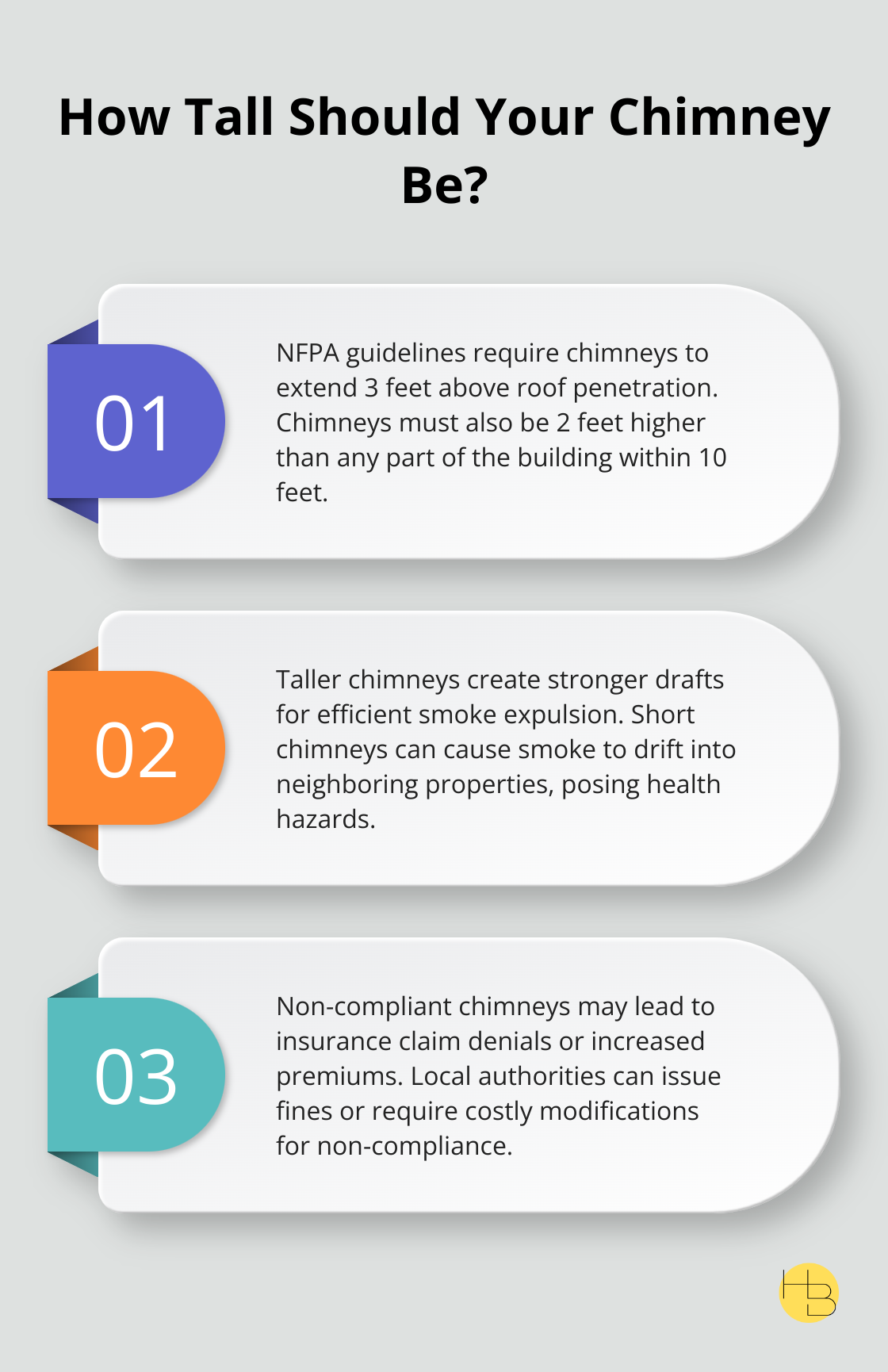
The National Fire Protection Association (NFPA) sets strict guidelines for chimney height, which most local building codes incorporate. These regulations typically require chimneys to extend at least 3 feet above the roof penetration point and 2 feet higher than any part of the building within 10 feet. Compliance with these standards is not optional; it’s a legal requirement for homeowners.
Impact on Draft and Smoke Dispersal
Chimney height significantly affects draft performance. A taller chimney creates a stronger draft, which is essential for efficient smoke and harmful gas expulsion from your home. The Chimney Safety Institute of America reports on the thermal characteristics of chimney fires and the potential damage they can cause to the chimney and other objects.
Safety Considerations for Occupants and Neighbors
The height of your chimney doesn’t just affect your home; it impacts your neighbors too. A chimney that’s too short can cause smoke to drift into nearby properties, creating a nuisance and potential health hazard. The Environmental Protection Agency (EPA) warns that the biggest health threat from wood smoke is from fine particles, also called fine particulate matter or PM2.5.
Consequences of Non-Compliance
Failing to meet chimney height requirements can have serious repercussions. Many insurance companies may deny claims or increase premiums for homes with non-compliant chimneys. Moreover, local authorities can issue fines or require costly modifications if your chimney doesn’t meet the necessary standards. The financial implications of non-compliance can be substantial, often far exceeding the cost of proper installation or modification.
Professional Assessment and Modification
Given the complexity of chimney height regulations and the potential risks involved, it’s advisable to consult with certified professionals for chimney inspections and modifications. These experts can assess your current setup, identify any compliance issues, and recommend necessary adjustments to ensure your chimney meets all relevant height requirements and safety standards.
As we move forward, let’s explore the specific details of the “Two-Foot Rule” and why this seemingly small measurement plays such a significant role in chimney safety and efficiency.
Understanding the Two-Foot Rule
The Basics of the Two-Foot Rule
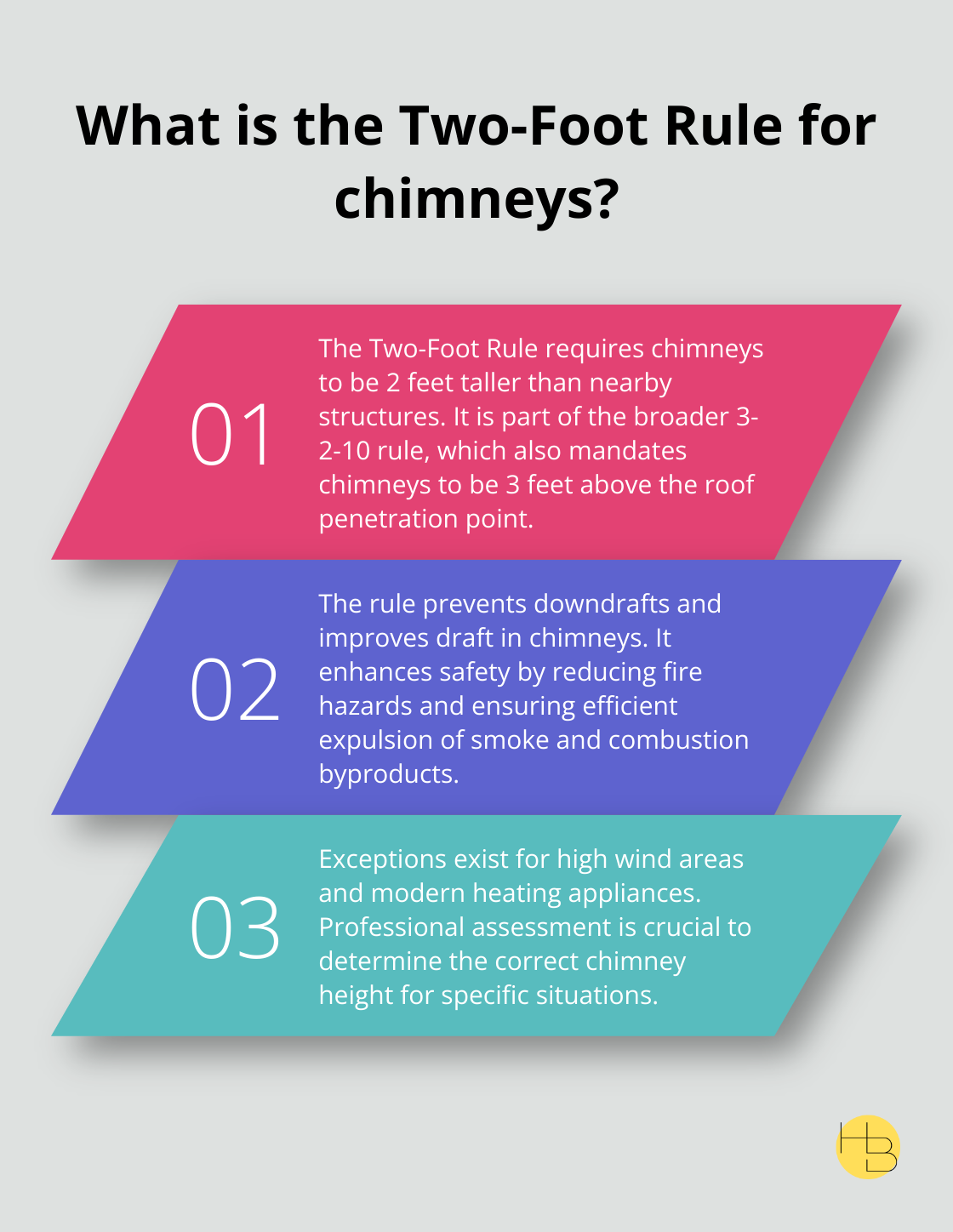
The Two-Foot Rule focuses on the clearance required between the top of the chimney and any structure, such as the roof overhang or adjacent buildings. It forms part of the broader 3-2-10 rule, which also requires chimneys to be at least three feet above the roof penetration point.
Importance of the Two-Foot Height Difference
The two-foot height difference serves multiple important purposes:
- Prevention of Downdrafts: It helps prevent downdrafts caused by nearby structures or roof peaks. These downdrafts can force smoke and harmful gases back into your home, creating health and safety risks.
- Improved Draft: The extra height promotes better draft, ensuring that smoke and combustion byproducts are efficiently expelled from your living space.
- Enhanced Safety: Proper chimney height (as dictated by this rule) significantly reduces the risk of fire hazards and improves overall home safety.
Exceptions and Special Considerations
While the Two-Foot Rule applies in most situations, certain exceptions and additional considerations exist:
- High Wind Areas: In regions prone to strong winds or unique topographical features, taller chimneys may be necessary to ensure proper draft.
- Modern Heating Appliances: Some high-efficiency units may have specific venting requirements that differ from traditional chimneys. Always consult the manufacturer’s guidelines and local building codes when installing or modifying a chimney system.
The Need for Professional Assessment
Determining the correct chimney height for your specific situation isn’t always straightforward. Factors such as roof pitch, surrounding structures, and local climate all play a role. That’s why professional assessment is essential.
A certified chimney specialist can evaluate your home’s unique characteristics and recommend the optimal chimney height to ensure safety and efficiency. They can also identify any potential code violations or safety hazards that might not be immediately apparent to the untrained eye.
The Two-Foot Rule isn’t just about following regulations-it’s about protecting your home and family from the dangers of poor ventilation and potential fire hazards. As we move forward, let’s explore the numerous benefits that come with adhering to this important rule.
Why Two Feet Make a Big Difference
Boosting Fireplace Efficiency
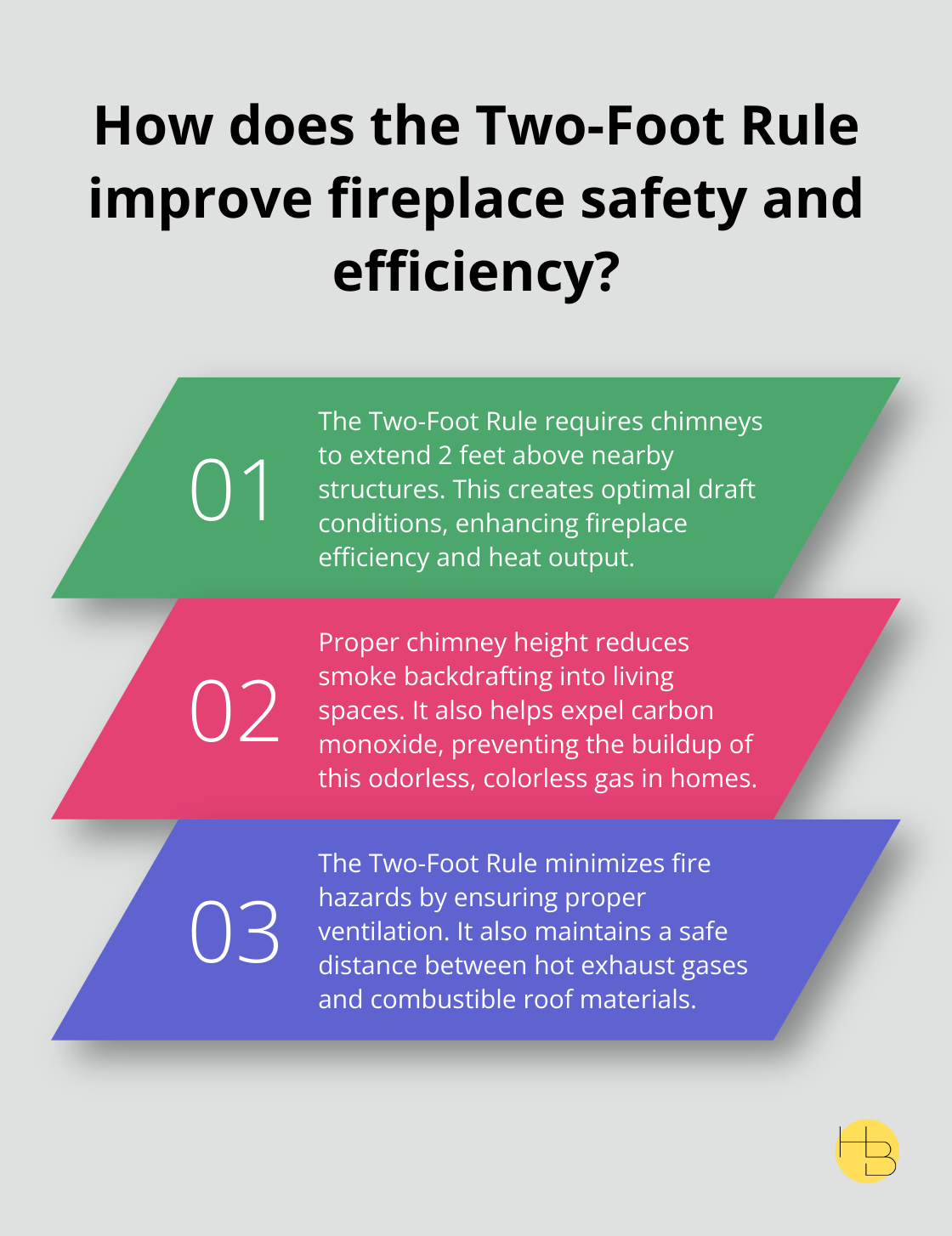
A chimney that extends two feet above nearby structures creates optimal draft conditions. This improved airflow enhances your fireplace’s efficiency, allowing it to burn fuel more completely. As a result, you’ll enjoy better heat output and potentially lower fuel consumption. However, it’s important to note that wood-burning fireplaces are generally very inefficient ways to heat your home, as fireplace drafts can pull warm air up the chimney.
Keeping Smoke Out of Your Home
One of the most noticeable benefits of the Two-Foot Rule is the reduced risk of smoke backdrafting. When your chimney is too short, wind currents can push smoke back down the flue and into your living space. This not only creates an unpleasant smoky odor but also poses health risks. The American Lung Association warns that wood smoke contains numerous harmful substances, including carbon monoxide and particulate matter.
Preventing Silent Dangers
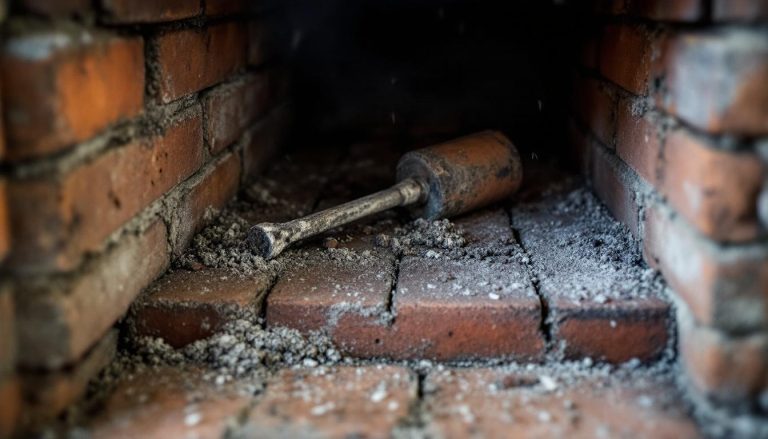
Carbon monoxide, often called the silent killer, is a serious threat in homes with improperly vented heating appliances. The Two-Foot Rule plays a vital role in preventing carbon monoxide buildup. It helps expel this odorless, colorless gas safely out of your home. Regular chimney cleaning is your first line of defense against CO poisoning, involving the removal of creosote deposit obstructions and identifying potential issues.
Enhancing Overall Home Safety
The Two-Foot Rule contributes significantly to overall home safety. It reduces the risk of fire hazards by ensuring proper ventilation and preventing the accumulation of flammable creosote in the chimney. This rule also helps maintain a safe distance between hot exhaust gases and combustible materials on the roof, further minimizing fire risks.
Complying with Building Codes
Adherence to the Two-Foot Rule ensures compliance with most local building codes. This compliance is not just a legal requirement; it also protects homeowners from potential insurance issues. Many insurance companies may deny claims or increase premiums for homes with non-compliant chimneys. The Two-Foot Rule helps you avoid these complications and maintain your home’s insurability.
Final Thoughts
Proper chimney height, including the “chimney 2 feet” rule, is essential for home safety and efficiency. This small measurement prevents smoke backdrafts, improves fireplace performance, and protects against carbon monoxide buildup. The two-foot height difference above nearby structures promotes better draft, reduces fire risks, and maintains good indoor air quality.
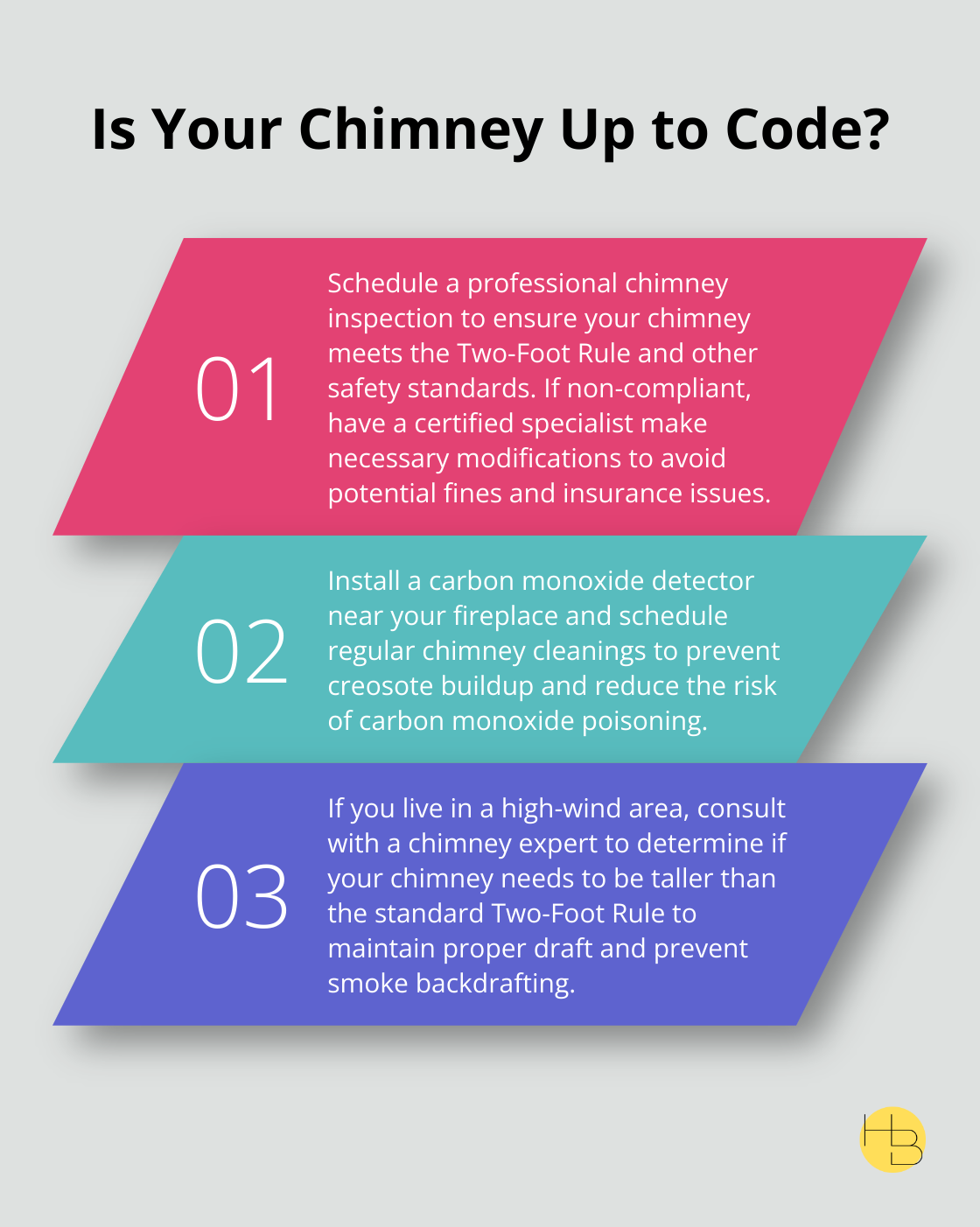
Professional guidance ensures correct chimney height and compliance with safety standards. Haileys Pro Services offers expert chimney cleaning and inspection services to meet all safety requirements. Our technicians assess your setup, identify issues, and recommend necessary modifications for safe and efficient chimney function.
A well-maintained chimney (meeting the two-foot rule and other safety standards) is an investment in your home’s safety and comfort. Don’t leave it to chance – consult with professionals to ensure your chimney meets all relevant safety standards. Your peace of mind is worth the effort.